Please wait...

Faculty details Nagamani Jaya Balila
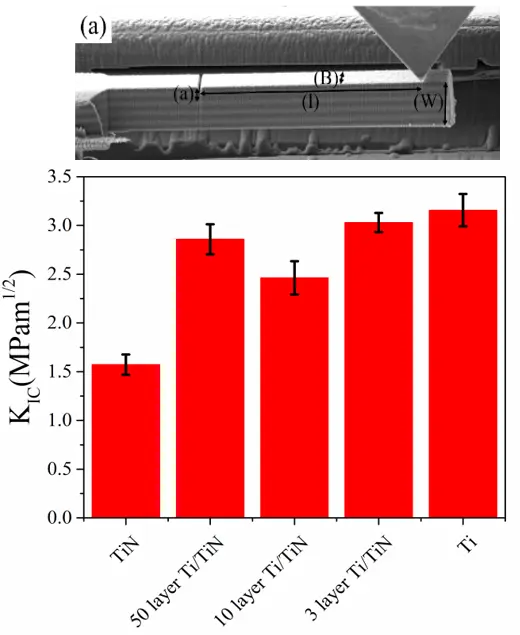
Associate Professor

Nagamani Jaya Balila

Email: jayabalila[at]iitb[dot]ac[dot]in

Phone: (+91) (022) 2576 7626

Education: 

  • Ph.D. ­ Materials Engineering, IISc Bangalore, 2013 
  • B.Tech ­ Met. & Matls. Engg., NlT Karnataka, 2007
Teaching

Prof. Jaya inculcates hands­on projects and laboratory components even in theoretical courses, to enhance both conceptual understanding and application of the concepts taught. She has been utilizing the maker space and her own mechanical test facility as resources. 

Courses taught are: Mechanical Behavior of Materials, Fracture Mechanics and Failure Analysis, Mechanics of Materials, Micromechanics of Thin Films and Small Structures, Metallography and Structural Characterization Laboratory.

Research profile

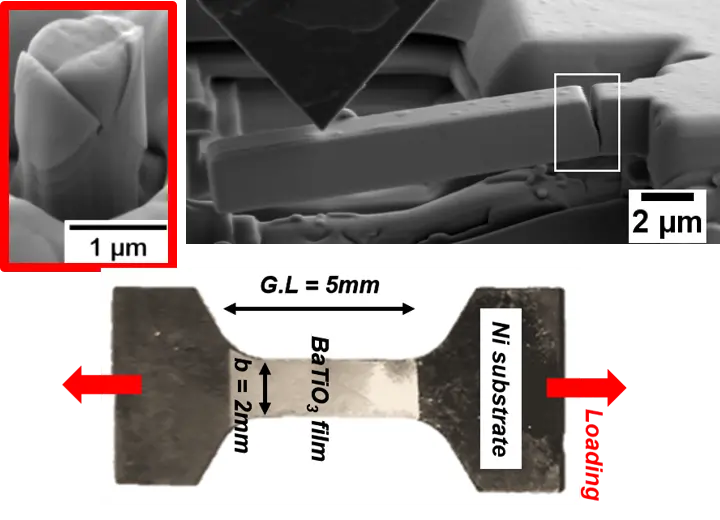
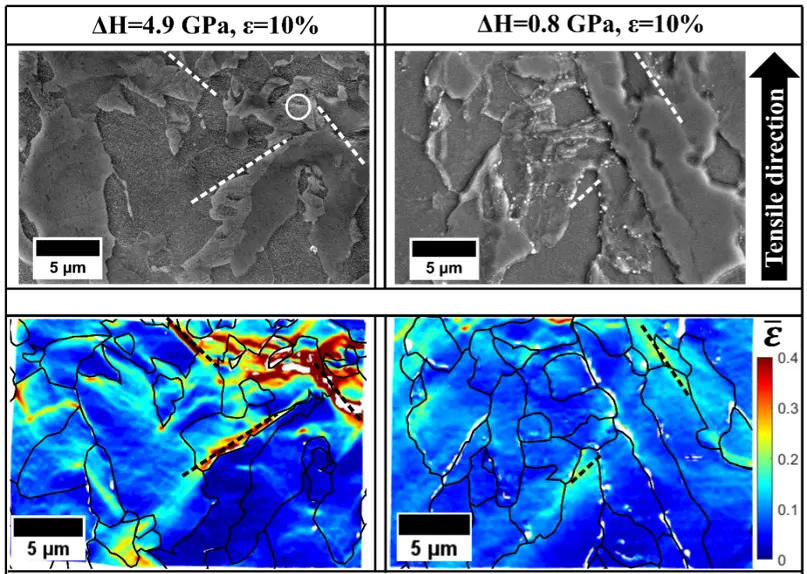
Prof Jaya's research interests are in mechanical behavior and structural integrity assessment of different classes of materials, across different length scales. Her focus is to deploy finite element modeling in combination with experiments to develop: Non­conventional fracture test geometries [1]; Design and development of damage resistant structures [2­3]; Microstructure and micro­mechanical characterization of interface dominated materials across stress states [4­6]. Her group is the first in the country to set up in­situ micromechanics techniques with full field strain mapping using digital image correlation under optical and electron microscopes [4­5]. She is funded by Pratt & Whitney, for her work on thermal spray coatings and additively manufactured superalloys, by IGCAR for solidification cracking in laser welded steels, and has been part of collaborations with TATA Steel to develop a miniature hole expansion ratio set up (patent filed) [6]. She has been the recipient of the Max Planck Society's External Partner­ Group Leadership Award, KITs International Excellence Fellowship Award, and Visiting Fellowship Awards at Hiroshima University and Xian­Jiatong University, for her collaborative work.

Research interest
  • Fracture mechanics of thin films, coatings and multilayered structures 
  • Design of damage tolerant composites and alloys through additive manufacturing 
  • In­situ micro­ and nano­mechanical characterization of alloys
Micromechanical testing techniques for small volumes

In­situ SEM­DIC strain mapping of DP steels

Fracture resistance optimization of multilayered Ti/ TiN films

References
  1. B. Nagamani Jaya, “Fracture in small­scale structures and confined volumes” MRS Bulletin, 47, 2022, 832­838 
  2. A. K. Mishra, H. Gopalan, M. Hans, C. Kirchlechner, J. Schneider, G. Dehm, B. Nagamani Jaya, “Strategies for damage tolerance enhancement in metal/ceramic thin films: Lessons learned from simulations and the system Ti/TiN”, Acta Materialia, Vol 228, 2022, 117777. 
  3. D. Yadav, B. Nagamani Jaya, Size effects governing damage resistance of architected PMMA, Engineering Fracture Mechanics, 2023, Vol. 290, 109526 
  4. S. Basu, B. Nagamani Jaya, H. Seekala, P. S. Phani, A. Patra, S. Ganguly, M. Dutta, I. Samajdar, Correlative Characterization and Plasticity Modeling of Microscopic Strain Localizations in a Dual Phase Steel, Materials Characterization, 2023, 197, 112704 
  5. N. G. Mathews, A. K. Saxena, N. Venkataramani, G. Dehm, B. Nagamani Jaya, “Multiscale characterization of damage tolerance in Barium Titanate thin films”, Journal of Applied Physics, Vol 132, Issue 4, 2022, 045302 
  6. S. Basu, B. Nagamani Jaya, S. Ganguly, M. Dutta, I. Samajdar, Novel miniature in­situ hole expansion test coupled with microscopic digital image correlation, Review of Scientific Instruments, 2023, (accepted)

Faculty details Prasad M.J.N.V.

Jindal Stainless Steel Chair Professor

Prasad M.J.N.V.

Email: mjnvprasad[at]iitb[dot]ac[dot]in

Phone: (+91) (022) 2576 7642

Education: 

  • PhD ­ Materials Engineering, IISc, Bangalore, 2010 
  • ME ­ Metallurgy, IISc, Bangalore, 2004 
  • BTech ­ Met. Engg. REC (now, NIT Warangal) 2002
Teaching

In teaching, Prof. Prasad focuses on fundamental aspects of relating the microstructure­mechanical properties­ thermomechanical processing of materials. 

Some courses taught are: 

Thermomechanical Processing and Forming of Steel; Mechanical Characterization of Materials; Plastic Deformation and Microstructure Evolution; Fatigue, Creep and Superplasticity; Protective Coatings; Advanced Composites; Heat Treatment Laboratory.

Research profile

The traditional paradigm of the materials science tetrahedron illustrates the structure­processing­ properties­ performance correlations for a material. Along similar lines, Prof. Prasad has defined the focus of his research majorly on ‘Microstructural Engineering and Mechanical Performance (MEMP)’ of various metallic alloys (both ferrous and non­ ferrous metals & alloys) and metal matrix/metal particles reinforced composites. One of the current thrust areas is to develop novel coatings and materials as a strategic approach to improve resistance against mechanical and chemical degradation of materials. The second one is on developing advanced high­ strength steels and advanced light alloys (Al alloys, Mg alloys, Ti alloys) for automotive, aerospace, and defense applications by adopting proper alloy design and thermo­mechanical controlled processing. And, the third one is on developing novel and advanced similar and dissimilar metal joints by solid­state diffusion bonding and friction­stir welding. The group has been working on understanding the deformation behaviour, oxidation, and corrosion performance of metallic materials at different microstructural length scales.

Research interest
  • Mechanical Behaviour of Metallic Materials 
  • Thermo­Mechanical Processing 
  • Metallic Coatings and Alloy Development Material Joining

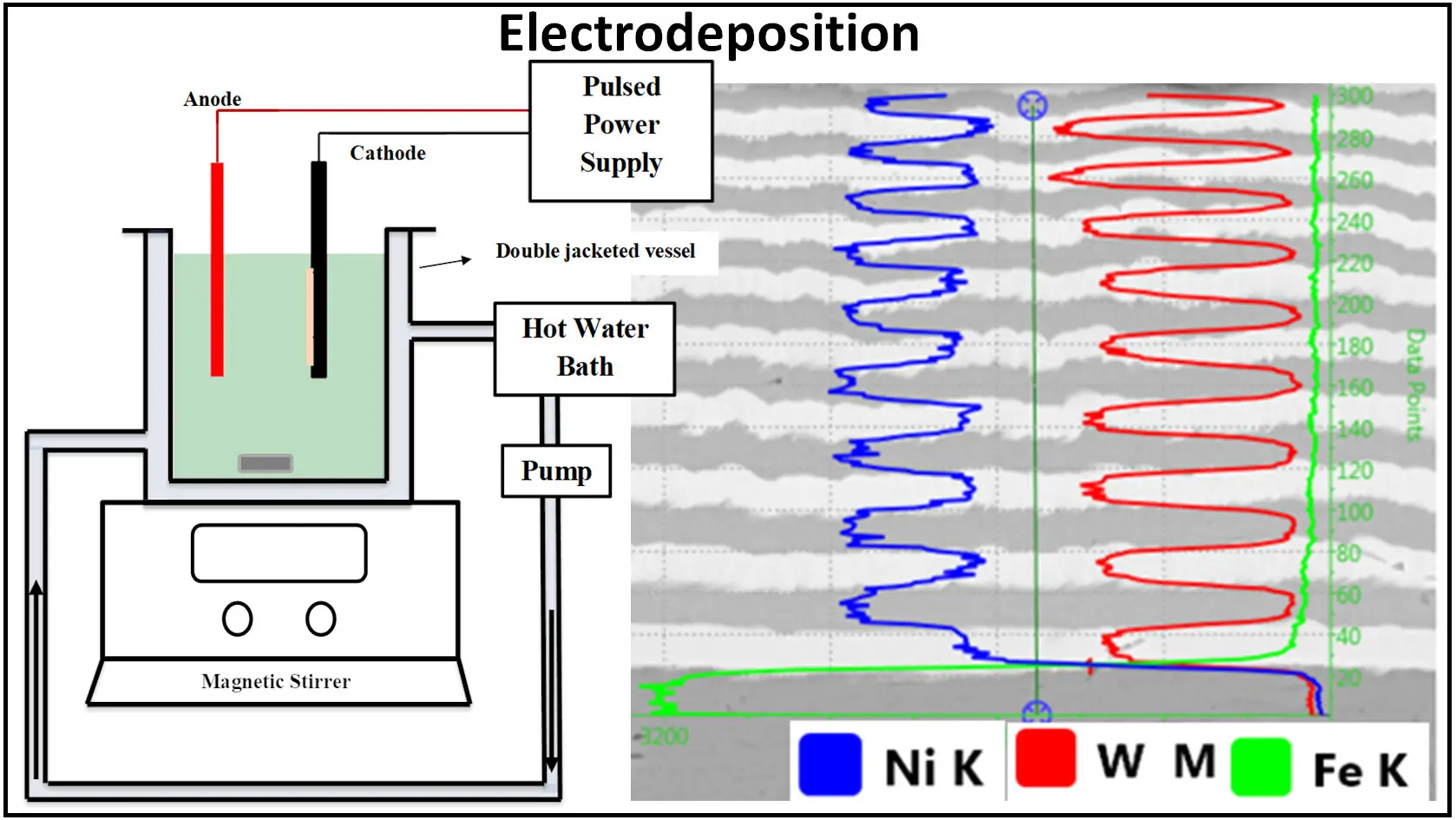
Electrodeposition of Ni­W multilayer coatings [1].

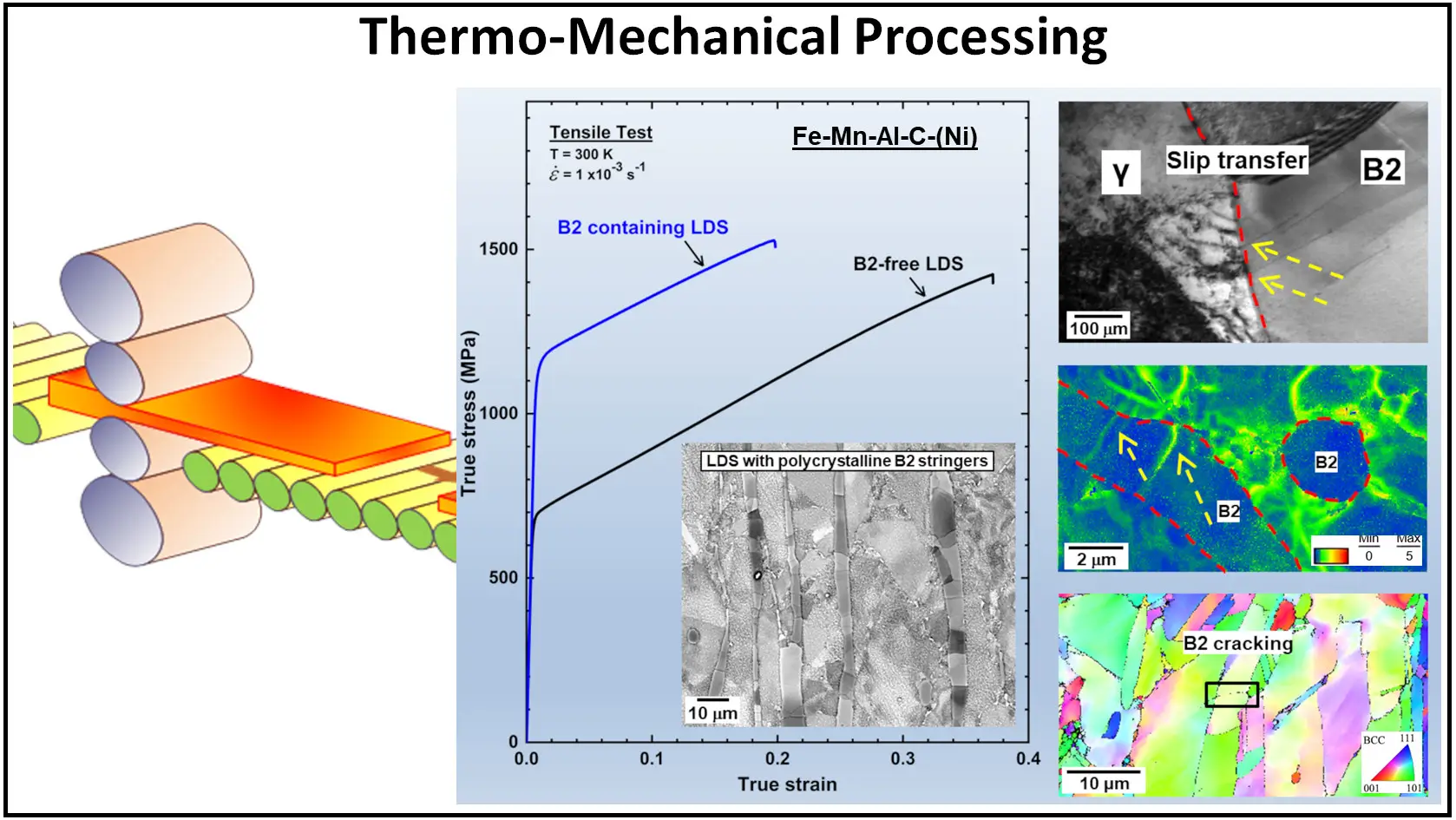
The role of secondary B2 phase on tensile behaviour of Fe­Mn­Al­C­(Ni) based low­density steels [2].

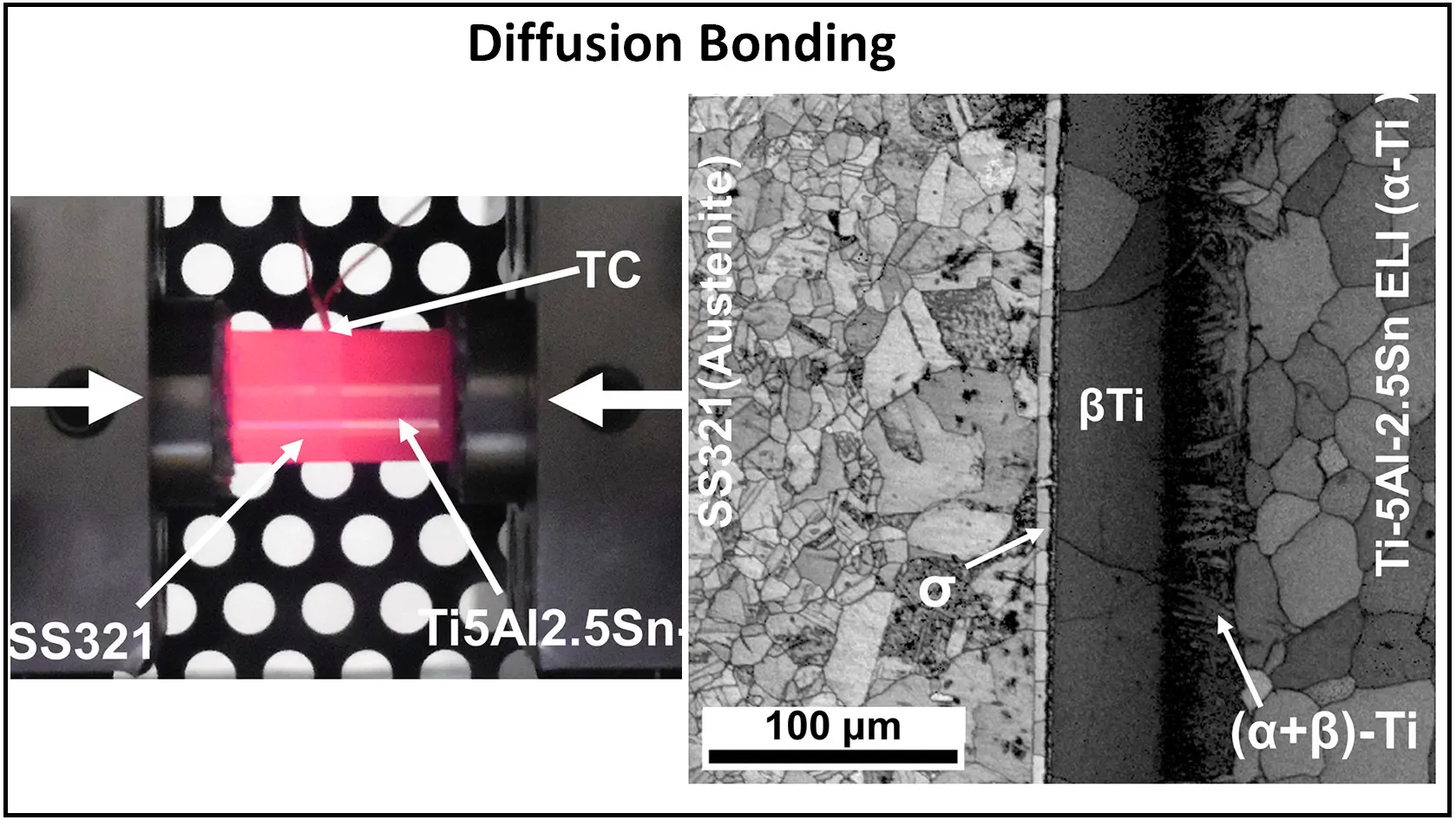
Solid­state diffusion bonding to produce dissimilar metal joints between stainless steel and titanium alloy [3].

References
  1. Lavakumar Bathini, M.J.N.V. Prasad and Nitin P. Wasekar, “Compositionally modulated Ni­W multilayer coatings: A facile approach to enhance the tribological performance,” Tribology International 179 (2023) 108145 (1­10). 
  2. Bidyapati Mishra, R. Sarkar, Vajinder Singh, A. Mukhopadhyay, Rohit T. Mathew, V. Madhu, M.J.N.V. Prasad, “Microstructure and deformation behaviour of austenitic low­density steels: The defining role of B2 intermetallic phase,” Materialia 20 (2021) 101198 (1­13). 
  3. Ravi Ranjan Kumar, Rohit Kumar Gupta, Aditya Sarkar and M.J.N.V. Prasad, “Vacuum diffusion bonding of α titanium alloy to stainless steel for aerospace applications: Interfacial microstructure and mechanical characteristics,” Materials Characterization 183 (2022) 111607 (1­15).

Faculty Details Durga A

Assistant Professor

Durga A

Email: a[dot]durga[at]iitb[dot]ac[dot]in

Phone: (+91) (022) 2576 5606

Education: 

  • PhD ­ Matls. Engg., KU Leuven, Belgium, 2015 
  • BTech ­ Met. & Matls. Engg., IIT Madras, 2009
Teaching

Prof. Durga uses a variety of teaching methods including in-­class short questions, group activities and project­ based assessment. There is a strong emphasis on process­-structure­-property correlations and modelling approaches in all her courses. She has taught the following courses: 

Undergraduate Courses: ­Casting and Joining, Thermodynamics of Materials 

Postgraduate Course: ­ Additive Manufacturing with Metals

Research profile

Prof. Durga's key research interest lies in modelling microstructure evolution when an alloy is subjected to different processes, be it casting, additive manufacturing (AM), or heat treatment. She has worked extensively on different approaches such as phase­field modelling, cellular automata and other numerical and analytical models. Through coupling such models with multicomponent Calphad thermodynamic and mobility databases, she has ensured that the models can be applied to technical alloys. In her research career thus far, she has worked on different projects collaborating with both industry and academia. Her research group is currently working on microstructure modelling during fusion­based metal AM [1,2] and solidstate phase transformations during AM. She is the PI of a project funded by the Science and Engineering Research Board on modelling microsegregation during metal AM and a co­ PI on a project within the JSW Technology Hub for Steel Manufacturing on alloy design.

Research interest
  • Computational Thermodynamics 
  • Metal Additive Manufacturing Phase 
  • Transformations Microstructure 
  • Evolution Mesoscale Modelling

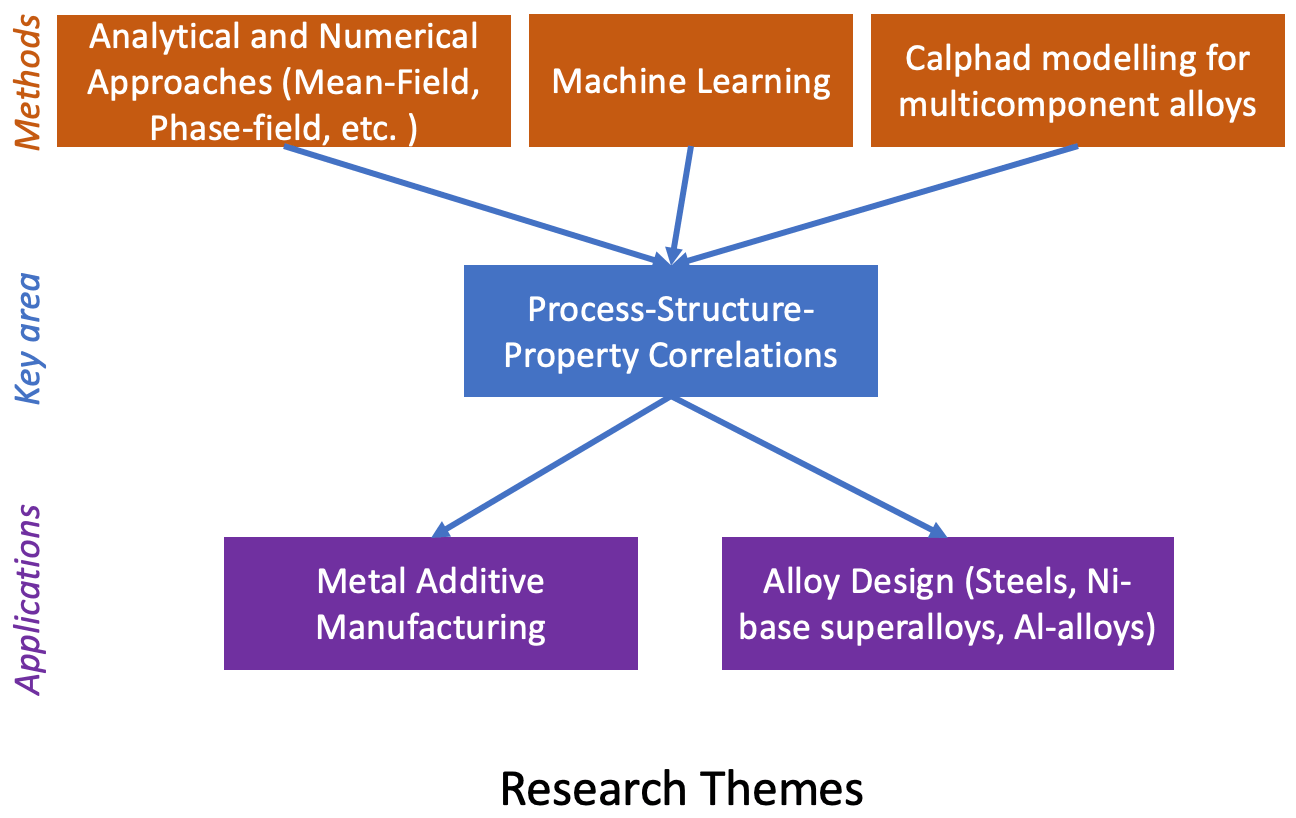
The key research themes of Prof. A. Durga's group

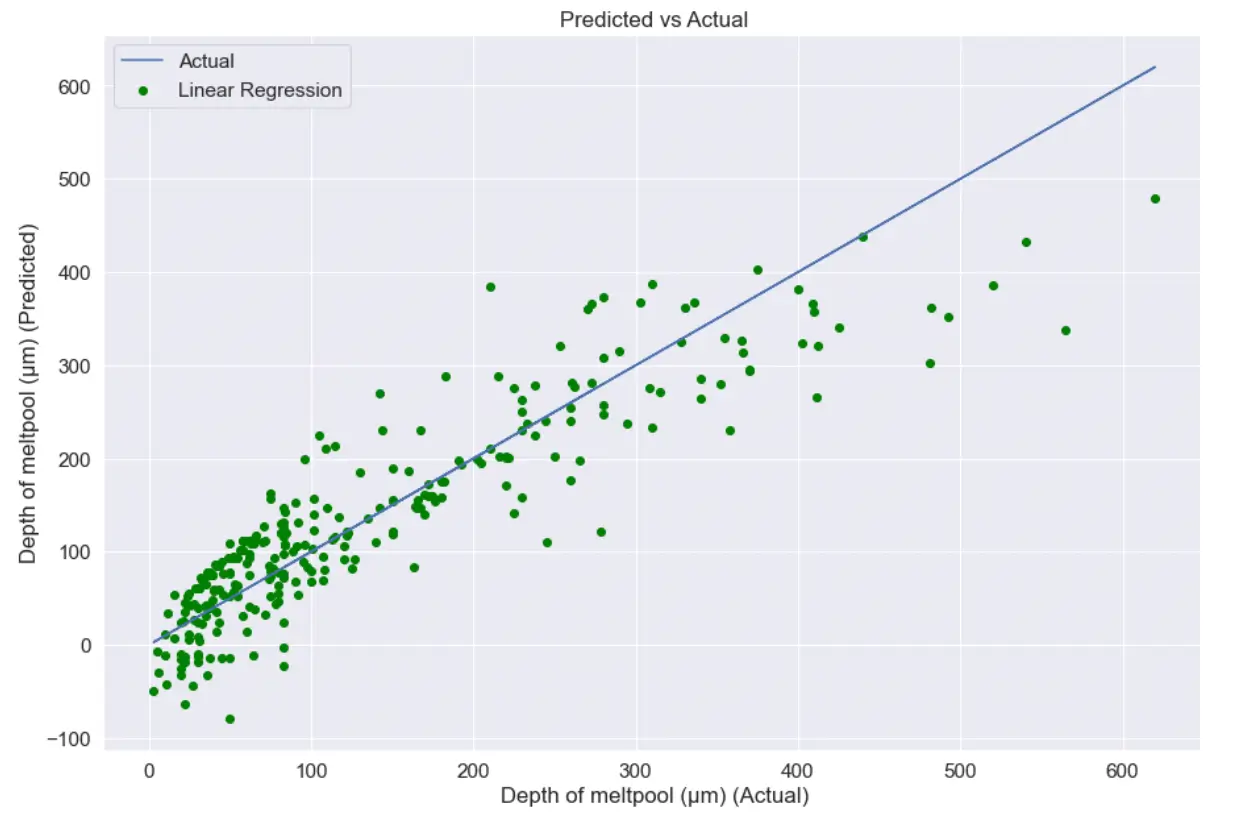
Comparison between the actual melt pool depths and those predicted using a linear regression model of additively manufactured Ti­6Al­4V alloy [1]

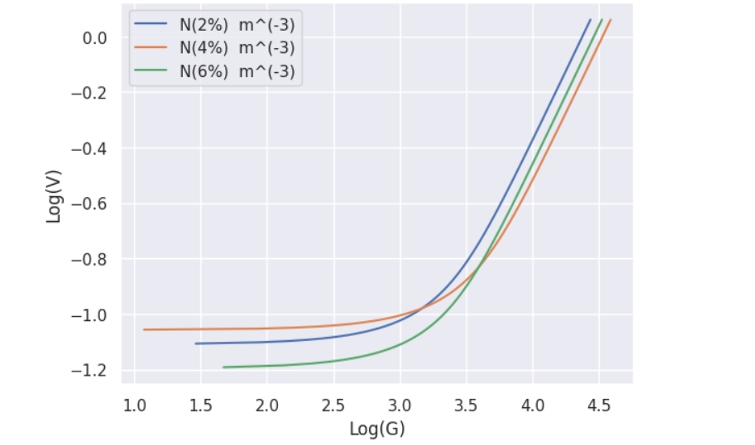
Temperature gradient G versus solidification growth front velocity V representing Columnar- to­Equiaxed Transition in grain structure [2]

References
  1. Nitesh Kumar Sachan, Optimizing parameters for 3D printing of defect free parts using ML algorithms, M.Tech. Thesis, IIT Bombay, 2023. 
  2. Loveneesh Lawaniya, Effect of heterogeneous nucleating sites on the as­built grain structure of additively manufactured steels, B.Tech. Project ­ I, IIT Bombay, 2023.
Subscribe to Manufacturing, Processing & Joining