

Assistant Professor
Vijayshankar Dandapani
Email: v[dot]dandapani[at]iitb[dot]ac[dot]in
Phone: (+91) (022) 2576 7617
Education:
- B.Tech (Chem. Engg.) – IIT Guwahati, 2009
- MS (Mats. Sci. & Engg.) – Rensselaer Polytechnic Institute, USA, 2011
- PhD (Matls. Engg. ) – Ruhr University Germany, 2017
Prof. Vijay emphasizes on mechanistic understanding of corrosion phenomena relevant to metallic materials to develop environmentally stable alloys for addressing pressing global energy needs.
Courses taught are
Undergraduate: Corrosion and Protection of Materials (Theory and Lab)
Graduate: High Temperature Corrosion, Corrosion Lab
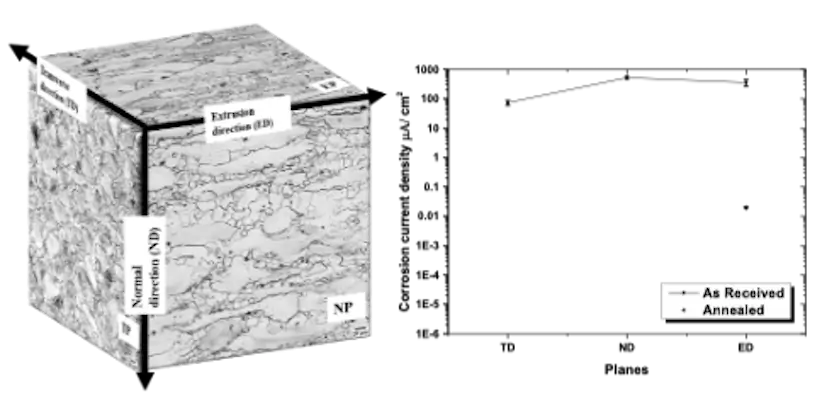
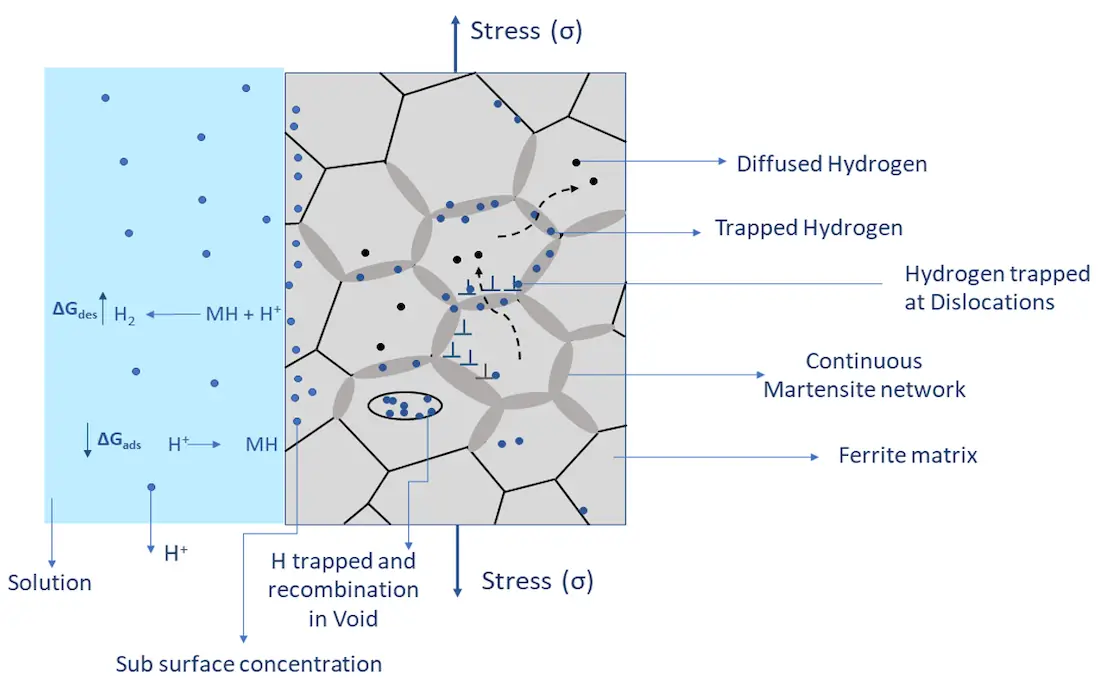
Prof. Vijay’ research interests are in the development of techniques for quantification of corrosion rate. Using principles of electrochemical hydrogen sensing combined with classical impedance spectroscopy a novel technique to screen polymer coatings for corrosion protection was developed [1]. As part of IITBMonash Academy, with Prof. MJNV Prasad and Prof. Raman Singh (Monash), current work focusses on understanding the effects of microstructure and stress on corrosion of biodegradable magnesium alloys for temporary human implant applications [2]. As part of the Startup Research Grant (SRG) funding provided by Science and Engineering Research Board (SERB), India development of a novel insitu electrochemical hydrogen permeation setup to work in tandem with tensile stress application to identify hydrogen and stress effects on failure of dual phase steels with defined microstructure relevant for the automobile industry is ongoing [3].
- Hydrogen electrochemistry
- Organic coatings and Electrochemical Impedance Spectroscopy
- Stress Corrosion Cracking
- Scanning Kelvin Probe
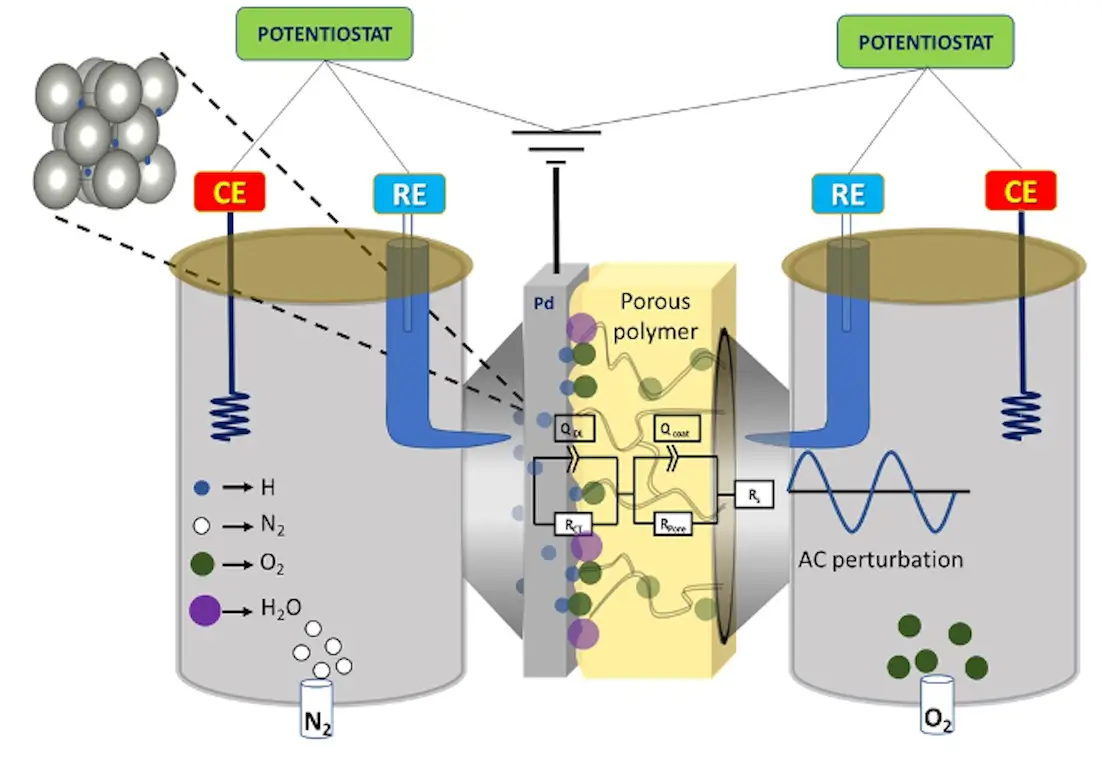
Hydrogen potentiometry and impedance spectroscopy for quantifying organic coating corrosion rate
Microstructure effects along different planes of extruded ZK60 alloy on corrosion rate in 3.5 wt % NaCl
Novel tensile testing with insitu hydrogen permeation to determine failure of dual phase automobile steels
- Combined Hydrogen Potentiometry and Electrochemical Impedance Spectroscopy Approach for Quantification of Oxygen Reduction Kinetics at Buried Metal/Organic Coating Interfaces, Rasmi Ranjan Tripathy and Dandapani Vijayshankar. J. Electrochem. Soc. , 170(5), 051501 (2023). https:// doi.org/10.1149/19457111/accf3c
- Electrochemical Corrosion Resistance of Mg Alloy ZK60 in Different Planes with Respect to Extrusion Direction, Keerthiga G, Vijayshankar D, Prasad M, Peron M, Albinmousa J, Singh Raman R. Metals. 2022; 12(5):782. https://doi.org/10.3390/met12050782
- Insitu tensile testing for understanding hydrogen induced failure of high strength dualphase ferritemartensite steels. Sudha Gautam and Dandapani Vijayshankar (In preparation)