
Professor
Gururajan Mogadalai P
Email: guru[dot]mp[at]iitb[dot]ac[dot]in
Phone: (+91) (022) 2576 7631
Education:
- PhD Metallurgy, IISc, Bangalore 2006,
- M Sc Engg, Metallurgy, IISc, Bangalore 1999,
- MSc Materials Science, Anna University, Madras, 1996,
- B Sc Physics, Madras University, 1994
Professor Gururajan's teaching interests include physical metallurgy, diffusion and kinetics, modelling and analysis, simulation and optimization, AI and data science, and computational laboratory. He has also introduced and taught courses on modelling of microstructure evolution and mathematical methods at the postgraduate level. He has taught a few NPTEL / Swayamprabha courses and cotaught three GIAN courses all of which are available in YouTube.
Professor Gururajan's research interests include modelling of microstructural evolution. He has close collaborations with experimentalists and enjoys working with them. The work carried out in his group includes phase field and atomistic modelling for phase transformation and deformation induced microstructural evolution. His research group is involved in developing and implementing new formulations of phase field models, and, more importantly, in developing open source code suites for phase field modelling. His research group consists of several undergraduates (from all over the country), masters students, phd students and postdocs who use cellular automaton, molecular dynamics, Monte Carlo and phase field models. The research carried out in the group is funded by projects from the Government of India as well as industries (Indian as well as International).
Phase field modelling, mechanics and thermodynamics of materials, atomistic simulations, modelling of microstrcutural evolution (physics based)
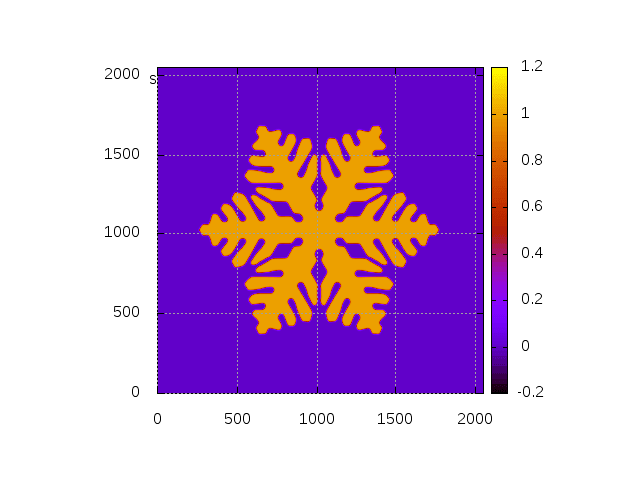
Implementation of a phase field model (using cuFFT) which incorporates hexagonal aniostropy in interfacial energy using sixth order tensor terms in the extended Cahn Hilliard model (the formulation of which also was developed in the group).
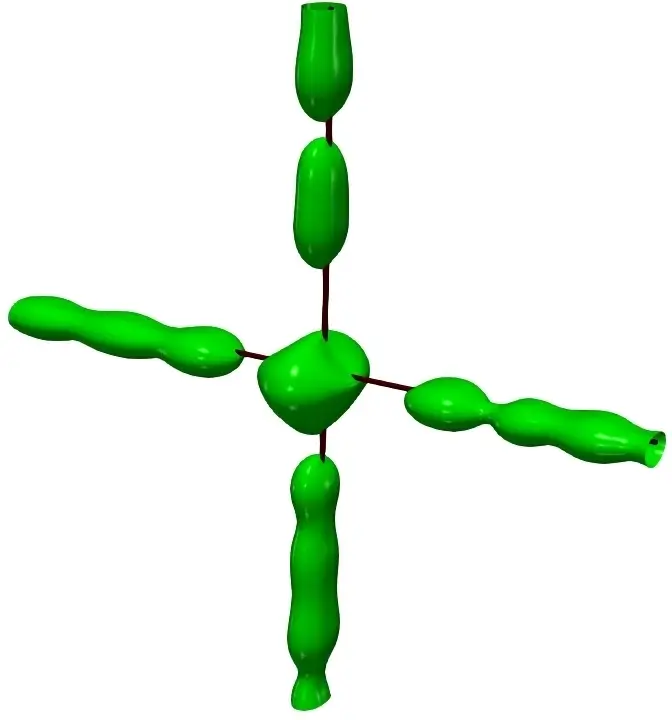
Phase field dislocation dynamics simulation results showing concurrent spinodal and nucleation and growth due to the presence of dislocations in a phase separating system. We have shown the crucial role of pipe diffusion in selecting the phase transformation mechanism.
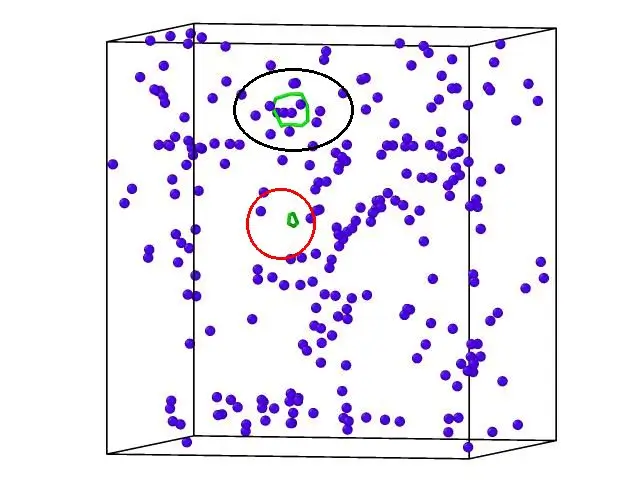
Homogeneous and heterogeneous nucleation in CuAl alloys using MD simulations carried out using LAMMPS. We have shown the solid solution softening in these alloys as a result of reduction in stacking fault energy with alloying addition.